Tactics are not one thing, and puzzle sets should not be judged as if they were.
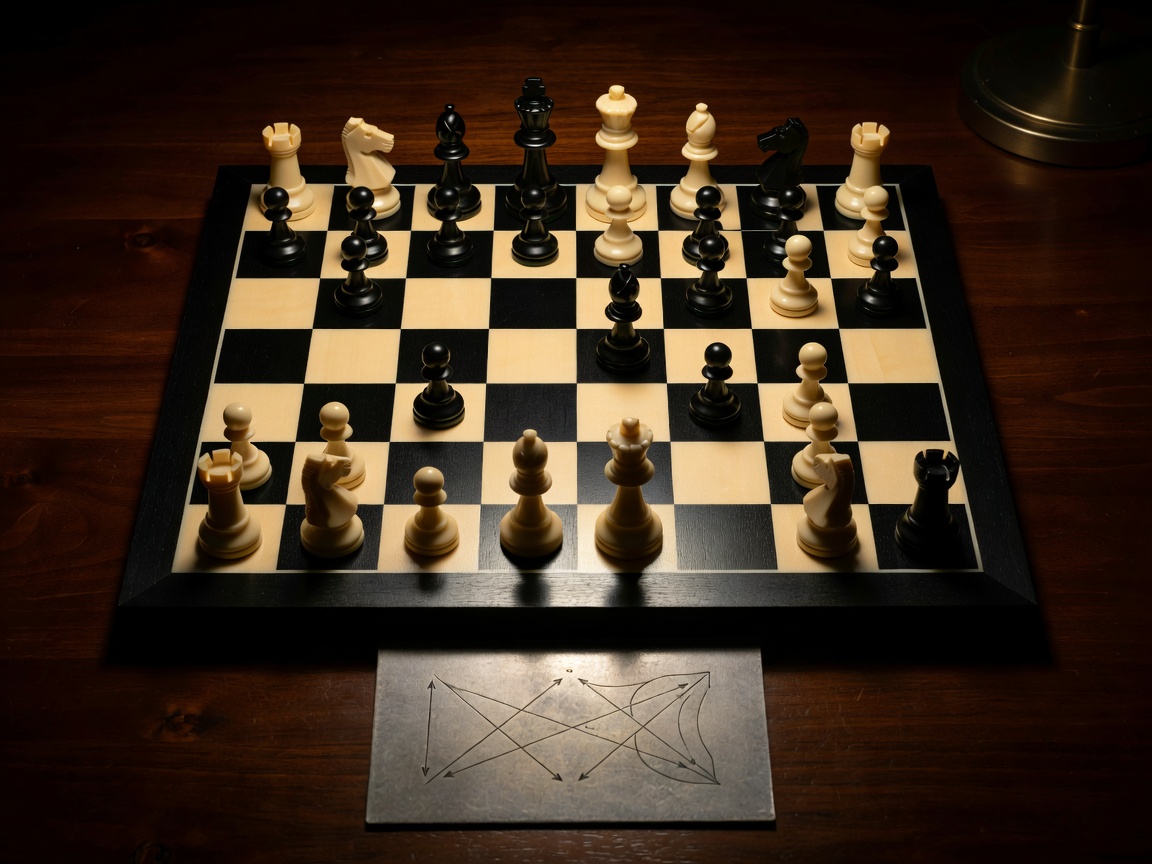
Chess puzzles are often treated as a single practice category, but a two-move mate problem, a tactical shot from a middlegame and a composed endgame study do very different work. They may all live on a board with the same pieces, yet they ask the mind for different habits. If your aim is better over-the-board decisions, it helps to know what each type actually trains.
The most common tactical motifs are familiar: forks, pins, skewers, discovered attacks, deflections, decoys, interference, removal of the defender and back-rank themes. These are not just labels for puzzle books. They are recurring geometric patterns. A good tactical trainer helps you see them earlier, but pure recognition is only part of the story. Many positions include a motif that does not work because move order, king safety or one quiet defensive resource changes everything.
This is where calculation enters. A useful chess puzzle is usually forcing enough to narrow the tree. Checks, captures and direct threats deserve attention first because they constrain replies. That old advice remains sound. Yet some puzzle collections over-teach snap pattern matching. You learn to expect a winning tactic whenever material hangs suspiciously. In real games, the position may only offer a small improving move, or no tactic at all. Training that relies only on bright combinations can make ordinary positions feel disappointing, which is unfair to the game and not ideal for decision-making.
Mate problems versus game tactics
Mate-in-two or mate-in-three problems sharpen precision and imagination, but they are a special genre. Composed problems often feature quiet key moves, surprising underpromotions or aesthetic themes that would be unusual in practical play. That does not make them less valuable. It just means their value is not identical to tactical training from tournament games. If you enjoy exactness and elegant constraint, composed problems are superb. If you want positions that resemble club play, game-derived tactics from collections by authors such as Fred Reinfeld or from annotated game databases may be more direct.
The same distinction applies to online puzzle trainers. Platforms such as Lichess and Chess.com present large tactical libraries, but the user experience can encourage speed. Fast solving helps motif recognition; it may also reward guessing the first plausible sacrifice. Books slow you down. You record lines, compare candidate moves and live with your own calculation for longer. Neither format is superior in the abstract. One develops quick pattern access, the other often supports cleaner thought.
Choosing by training goal
If blunders are your main problem, simple one- and two-move tactics are not beneath you. They are probably the right medicine. Missing a knight fork is not a philosophical failing. It is a recognition lapse. On the other hand, if you already see basic motifs and still collapse in sharp middlegames, you may need deeper calculation exercises where the first move is not obvious and defensive resources matter.
Endgame studies deserve separate mention. They are frequently beautiful and occasionally mildly rude. A study can ask for a paradoxical king move, a stalemate resource or a precise triangulation sequence that feels like a puzzle made by someone who does not expect to pay rent. Still, studies improve board vision and teach possibilities that ordinary tactical sets ignore. Just do not confuse them with routine practical positions.
How to solve without teaching yourself bad habits
Set a discipline before you begin. First, identify forcing candidates. Second, calculate opponent replies until the position is stable. Third, only then compare lines. If you move too quickly because the interface rewards streaks, you train impulse as much as skill. Written notes help, especially with books or printed diagrams. Algebraic notation slows the mind in a useful way.
It also helps to classify your misses. Was the motif unseen? Was the first move seen but the defence missed? Did you stop calculating once the position looked promising? Those are different errors. Puzzle work is most valuable when it names the exact leak.
In short, a good puzzle routine does not ask chess to become a slot machine of combinations. It asks the board to teach geometry, forcing logic and self-control in different proportions. Pick your material with that in mind, and the tactics stop feeling random.