Word games share letters, but not the same kind of intelligence.
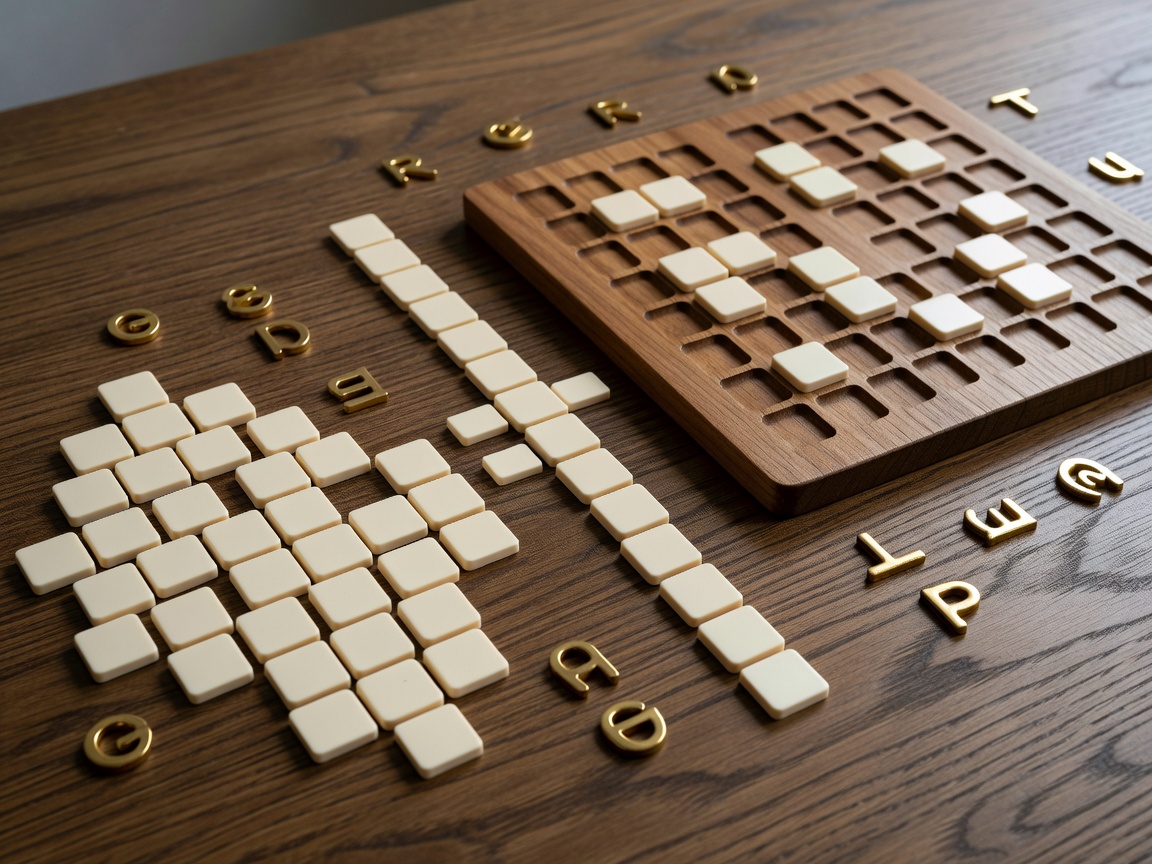
Word games are often discussed as if they all measure vocabulary, but that is only part of the picture. Some games reward retrieval speed. Some reward spatial scanning. Some reward phonetic instinct. Others depend heavily on pattern elimination and the management of partial information. If you like one word game and dislike another, the reason is usually structural, not literary.
Anagrams are the most direct example of letter manipulation. They ask you to reorganise a fixed set of letters into one or more valid words. In newspaper puzzles and quiz formats, the challenge often lies in chunking. Solvers stop seeing seven isolated letters and start seeing likely clusters such as -ing, re-, or common consonant frames. This is a very different pleasure from clue-based crosswords because the path to the answer is not semantic misdirection but rearrangement pressure. You are rotating shapes in language form.
Boggle changes the mechanism again. Here the task is path finding on a grid, usually under time pressure. Vocabulary matters, but so does board vision. You are scanning adjacencies, remembering which routes are still open and deciding whether to spend effort extending one long word or harvesting several shorter ones quickly. Because the board is shared, Boggle also has a tactical social wrinkle: common words may cancel out between players, so unusual finds carry extra value in practice even though the formal scoring system handles that differently from game to game.
Bananagrams feels closer to speed construction. The game asks players to build and rebuild personal crossword-like layouts from letter tiles. The challenge is less about deep clue solving and more about elastic vocabulary under pressure. Short flexible words and quick rearrangement matter. For some players this is liberating. For others it feels like being mugged by two-letter words and a table full of urgency.
Daily guessing formats and why they spread so easily
Daily guessing games such as Wordle popularised a cleaner structure: a hidden word, limited attempts, and feedback on letter presence and position. The attraction is obvious. The rules are tiny, the session is brief and the feedback loop is sharp. More interestingly, the game sits halfway between vocabulary and logic. A strong player does not merely know many words. They choose guesses that partition the remaining possibilities efficiently.
This is why the discourse around “good starting words” can become endless. The right opener depends on what you value: vowel coverage, common consonants, positional frequency or information spread across likely answer sets. The important point is that the game is not a spelling bee. It is constrained search. That makes it closer to Mastermind than to freeform wordplay, even though the surface is lexical rather than coloured pegs.
Word ladders introduce yet another logic. Each step changes one letter while keeping a valid word at every stage. Here the game blends vocabulary with graph navigation. You are moving through a network of legal transformations. Some pairs of start and end words feel elegant because the path is visible in hindsight but awkward in the moment. The appeal lies in discovering a route through narrow legal channels.
How to choose the right type for your taste
If you like speed and social noise, Boggle or Bananagrams may suit you better than a solitary daily guess. If you prefer reflective narrowing with clean feedback, Wordle-style formats are strong. If you enjoy fiddling with letter clusters, anagrams and jumbles remain durable. If you want something that feels almost mathematical, word ladders can be surprisingly satisfying.
Difficulty also behaves differently across formats. In Boggle, difficulty can come from board density and the ability to notice obscure paths quickly. In daily guessing games, difficulty often comes from answer ambiguity among several plausible forms. In anagrams, difficulty rises when common chunks are absent and the letter set resists easy grouping. So a person can be excellent at one word game and mediocre at another without contradiction.
What all these games teach
The shared lesson is not “better vocabulary” in a broad heroic sense. It is attentional control. You learn to test patterns, discard dead ends and notice structure inside a limited symbol set. That is why word games remain compelling long after the novelty of any single title fades. They make language behave like a puzzle box.
Pick the one whose friction you enjoy. If the timer thrills you, lean into scan-heavy games. If careful elimination is your thing, choose a guessing format. If flexible spelling under pressure amuses you, let the tile games have their little panic attack in peace.