Why the grid matters as much as the clue.
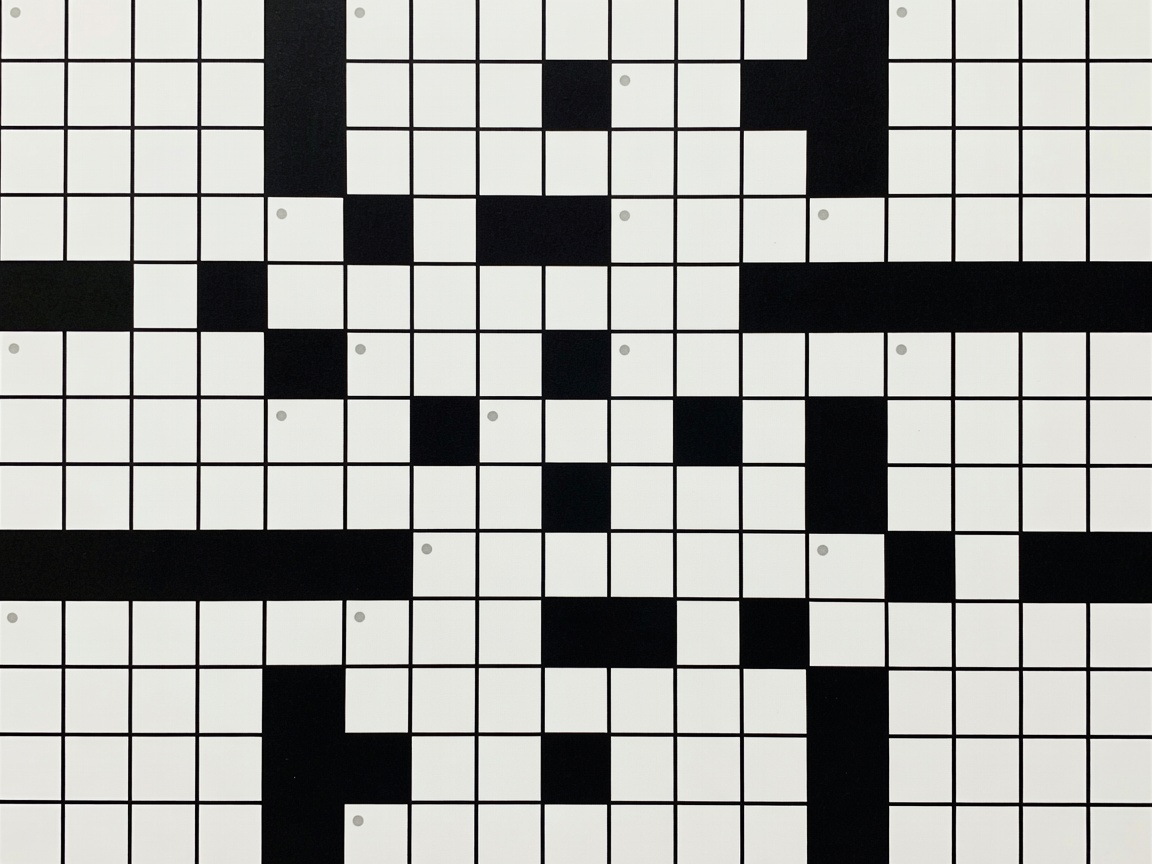
The first visible thing in a crossword is often the clue list, but the grid quietly decides the character of the whole solve. A dense blocked grid with many short entries behaves differently from a barred cryptic with longer lights and fewer interruptions. The difference is not cosmetic. It changes how often you get checked letters, how much momentum a single answer can create, and whether the puzzle feels like a conversation with the setter or a series of isolated tests.
In American-style daily crosswords, blocked grids with rotational symmetry are common. Black squares split the space into entries, and a fair puzzle usually gives a high degree of cross-checking, meaning many letters belong to both an across and a down answer. That checking reduces ambiguity. It also allows a solver to move with partial knowledge, because one confident answer can rescue several uncertain clues nearby. The New York Times crossword is the obvious named example because many readers know its structure, even if they do not solve it every day.
British cryptic crosswords often use either blocked grids, as in many newspaper puzzles, or barred grids, where thick lines replace black squares. Barred grids allow longer answers and a more open look, but they can reduce checking. That raises the burden on clue interpretation. In a cryptic, that can be deliberate. The clue is expected to carry precise wordplay, so the grid does not need to do all the kindness on its own. Still, there is a trade-off. Less checking can make an elegant clue feel severe when several answers in a corner depend on each other.
Blocked and barred are not small variations
A blocked grid uses solid black cells as separators. That creates more stop-start rhythm and more shorter entries. Those shorter answers can be easier to place from checking letters, but they can also increase the number of clues where a generic synonym almost fits. A barred grid keeps more continuous white space, so answer lengths stretch out and thematic material sits more naturally. The cost is that long entries with sparse checking can leave a solver staring at a clue with too many degrees of freedom.
This is why experienced solvers often ask about checking ratios. A checked letter is one confirmed by a crossing answer. In many blocked puzzles, especially mainstream newspaper formats, generous checking keeps the solve moving. In some barred cryptics, the lower checking rate means you rely more heavily on clue mechanics such as anagrams, containers, reversals, homophones and hidden words. If you enjoy proving each answer from the clue itself, this can feel clean and satisfying. If you prefer gradual confidence built from the grid, it can feel austere.
Symmetry, theme and fill quality
Symmetry is another structural choice with consequences. Many editors expect rotational symmetry because it gives a puzzle visual order. Yet strict symmetry can restrict construction. When a constructor is placing a theme set, especially long entries, every decision narrows the remaining fill. Fill is the set of non-theme answers used to complete the grid. A solver notices fill quality immediately, even without naming it. Clean fill contains familiar words, fair abbreviations and limited crosswordese. Weak fill leans on obscure bits of glue, awkward partial phrases and tired abbreviations that exist mostly because the grid needed them.
Theme-heavy puzzles test this balance. A daily themed crossword may include puns, rebus squares or a pattern linking several long entries. The theme can make a puzzle memorable, but it also places stress on the grid. If the theme entries force poor crossings, the pleasure of recognition is paid for elsewhere. Some of the best themed crosswords disguise that pressure well. Others announce the gimmick and then ask the solver to excuse the collateral damage. The trade-off is worth noticing when you choose what to solve.
How solvers should read a grid before starting
A quick scan of the grid tells you a lot. Count the long entries. Notice whether corners are tightly segmented or open. Look for stacks of unchecked letters or unusual answer lengths. In a cryptic, a barred layout suggests that clue reading will carry more of the load. In a blocked American puzzle, clusters of short answers may mean brisk progress once a foothold appears. If a puzzle includes circled cells, unusual numbering or obvious theme lengths, expect the constructor to be playing a broader structural game.
It is also worth noticing how the grid distributes difficulty. Some puzzles build a hard north-west corner and then loosen elsewhere. Others place long central entries that unlock large regions. This is not about rankings or live difficulty labels. It is about architecture. A fair grid lets knowledge travel. An unfair one traps it in pockets.
What to choose if you are selecting crosswords on purpose
If you like steady feedback, choose blocked grids with generous checking. If you like clue virtuosity and do not mind carrying uncertainty longer, barred cryptics can be more rewarding. If themes delight you, accept that fill quality may vary more from puzzle to puzzle. If clean vocabulary matters most, look for editors known for tight standards and restrained gimmicks.
The useful habit is to stop blaming yourself for a solve that feels awkward and ask whether the grid is doing its share of the work. Quite often, the answer is sitting there in black squares and bars.